
Financial Management System
A real double-entry finance system, not a billing ledger.
Finance teams close the month in spreadsheets because the system of record only does invoicing. Fixed assets live in one file, budgets in another, and the auditor asks for a trail nobody can produce.
A full accounting platform: general ledger, receivables, payables, payroll, fixed assets and budgeting, with multi-entity consolidation and a statutory reporting suite.
Not a mock-up
Every screen below is the running product, photographed against a manufacturer’s own data — its sites, its stock, its people. Nothing here is a rendering.
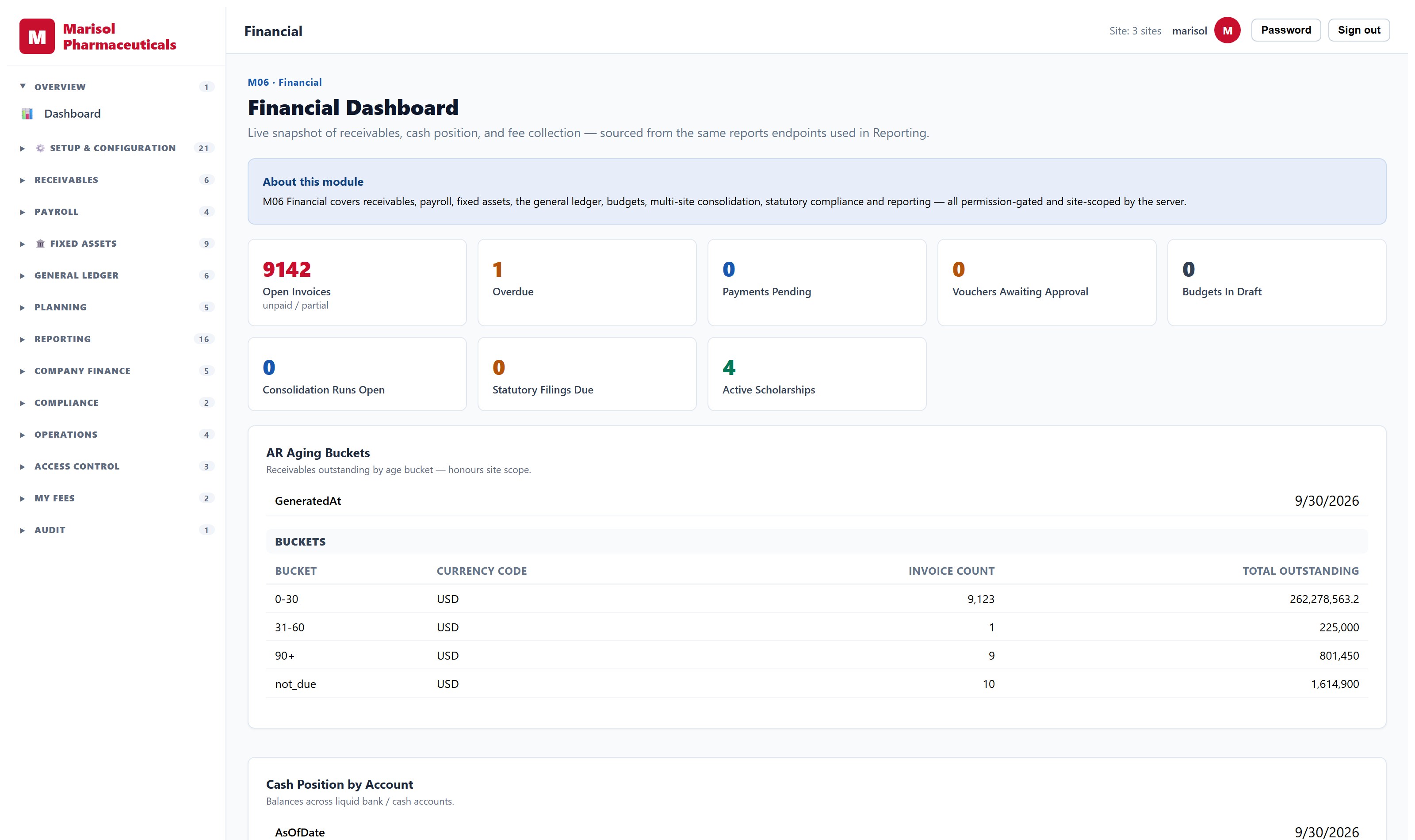
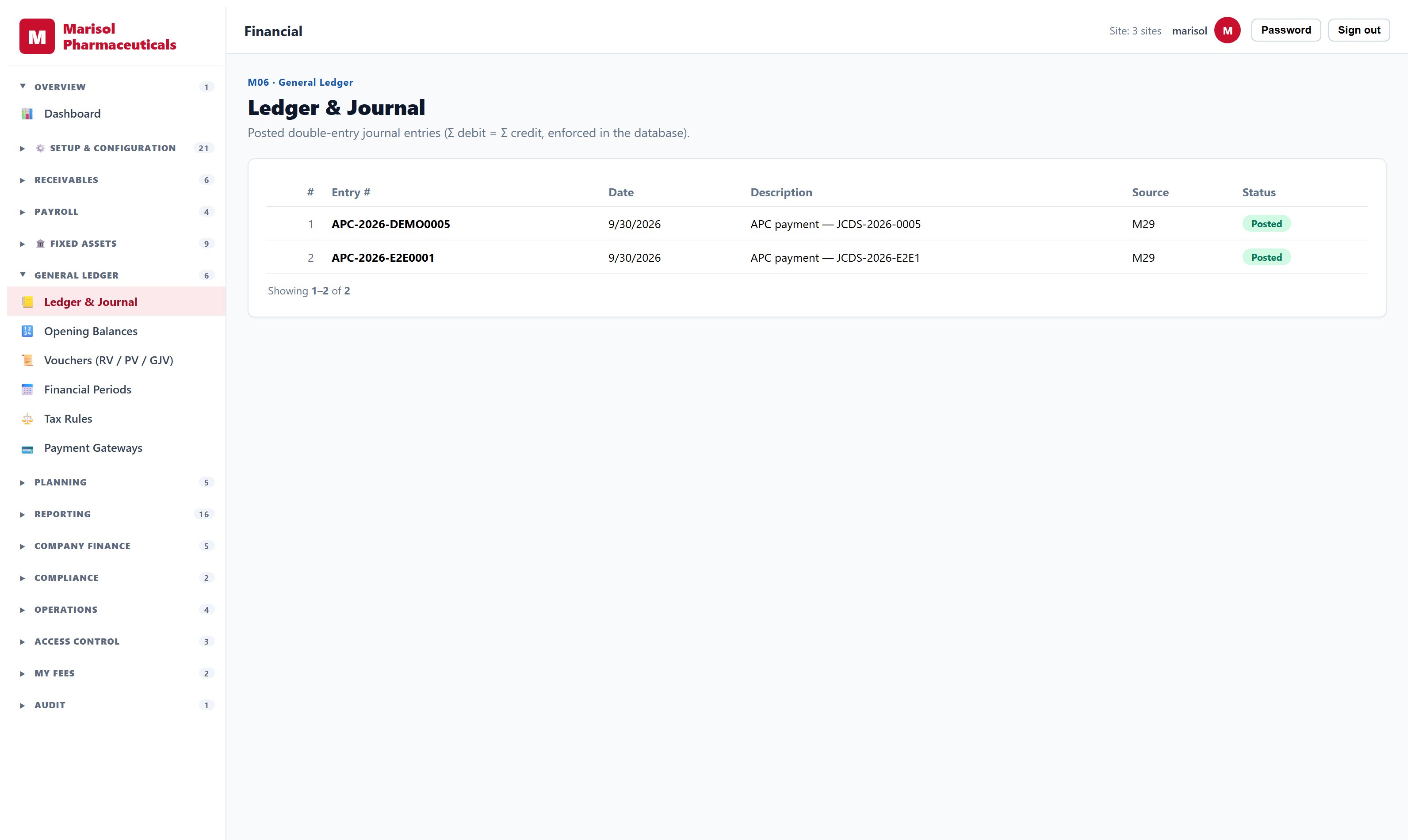
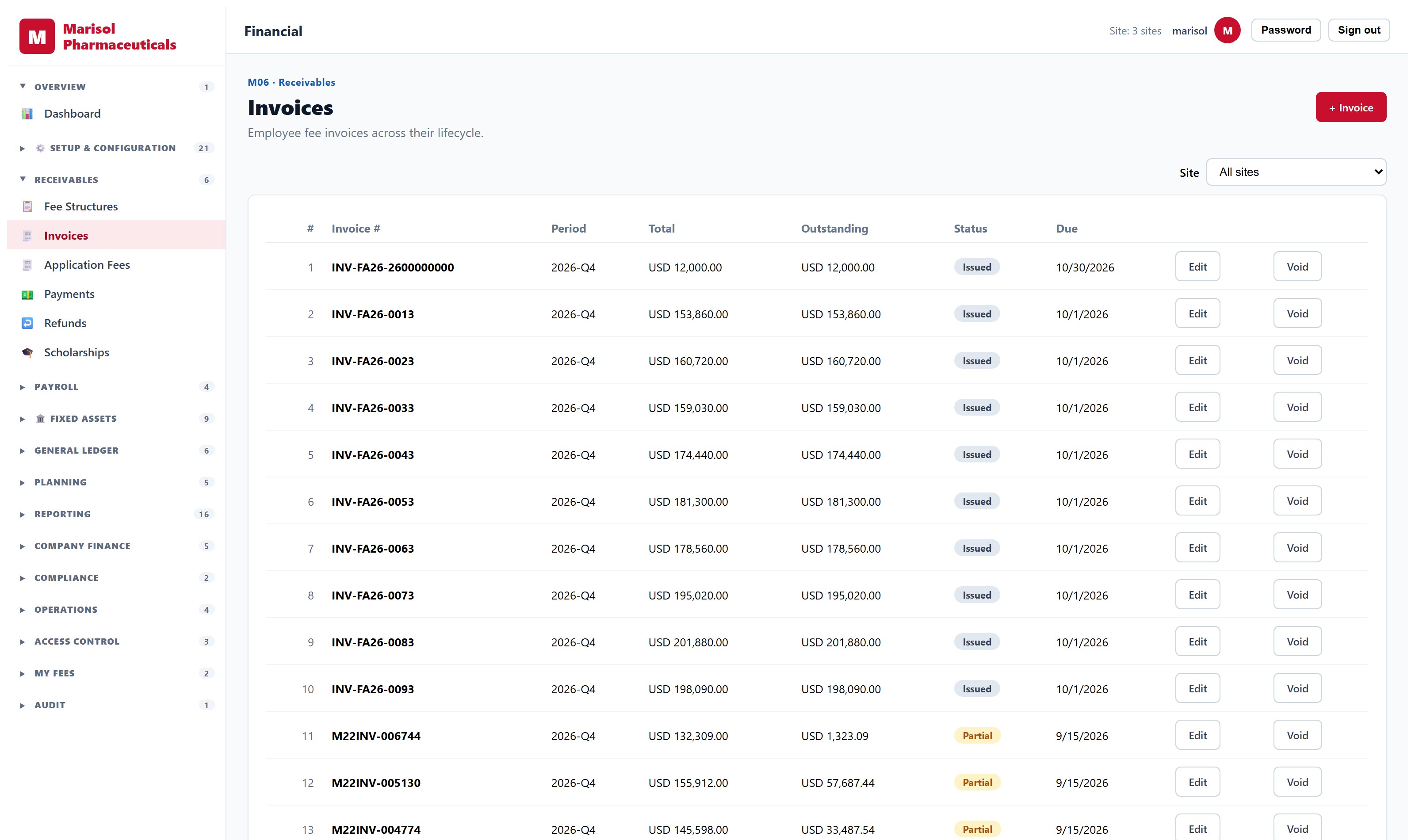
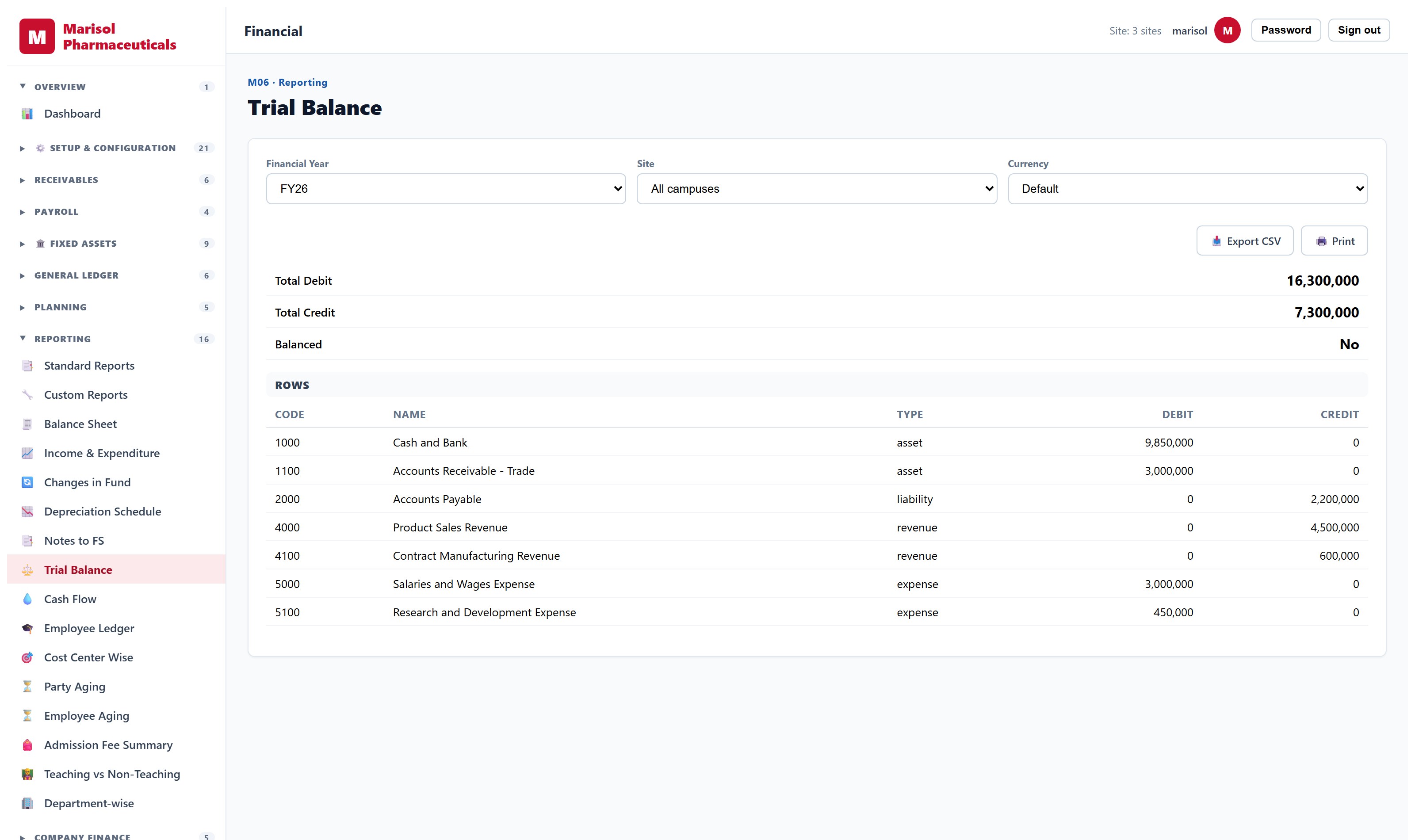
- General ledger with chart of accounts, journals, voucher types and period close
- Billing, payments across cash, cheque, card, bank and mobile wallet, with reconciliation
- Payroll: pay runs, allowances and deductions, payslips, leave integration
- Fixed assets from purchase through depreciation to disposal, posting automatically to the ledger
- Budgeting with allocation, cycles and approval workflows
- Balance sheet, income and expenditure, trial balance, cash flow, ageing and cost-centre reports
- Multi-entity consolidation with intercompany elimination and currency translation
- Tax configuration, withholding, full audit trail
What the software decides, and what you decide
Automation here drafts and flags; a person approves. Where something is built you can see it in a demo today. Where it is planned, it says so.
Planned, not yet shipped
Flags transactions that do not fit the account’s pattern before period close
On the roadmap- Replaces
- Finding the miscoded entry after the close, in the audit
- Who stays accountable
- Raises a review item on the accountant’s queue; posts nothing itself
Extracts line items, totals and tax from a supplier invoice into a draft entry
On the roadmap- Replaces
- Keying invoices by hand from PDF or paper
- Who stays accountable
- The draft is held for approval; nothing reaches the ledger unreviewed
Evaluating finance, HR and procurement software
A checklist for the systems that run the back office — what to test in the demo, and the questions that separate a ledger from a billing screen.
Read →Reports you build yourself
The report you need on Tuesday is rarely the one shipped in the box. What a real report builder has to do — and the part vendors get dangerously wrong.
Read →An executive dashboard you can trust
Most executive dashboards are re-keyed summaries that disagree with the systems underneath. Here is what has to be true before a board uses one.
Read →See it on your own data
A demo runs against a working system, not slides. Tell us what you run today and we will show you the part that matters to you.
Request a demo